Ten Benefits of an International Education

An international education offers far more than the opportunity to study in another country. From developing cultural awareness and confidence to accessing globally recognised qualifications, it can prepare young people for university, work and life in an increasingly connected world.

For many expatriate families, international education begins as a practical necessity. A parent’s work takes the family overseas and the children enrol in a school that offers a familiar language or curriculum.

Yet the experience can become one of the most valuable aspects of international family life. At its best, an international education combines academic learning with cultural understanding, adaptability and a broader view of the world.

International schools vary enormously in their curricula, values, size and quality, so the advantages are not automatic. Nevertheless, the right school can offer children opportunities that extend far beyond the classroom.
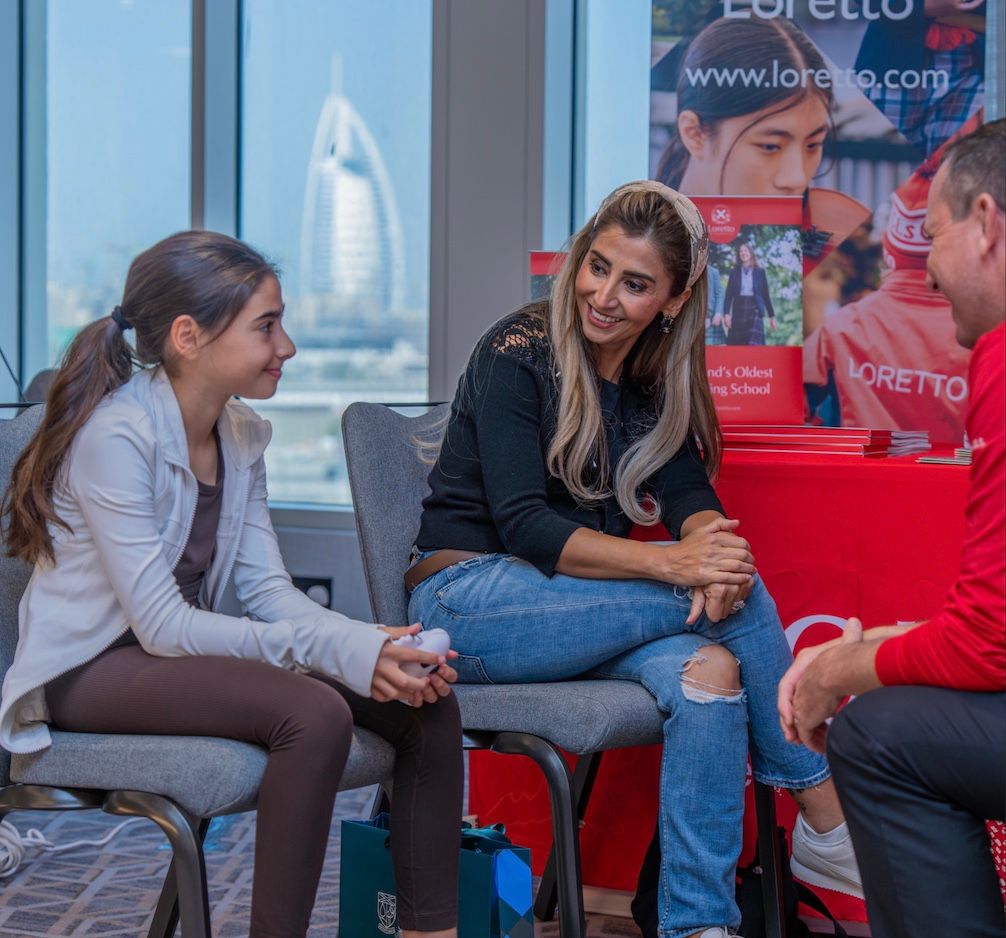

1. A genuinely global outlook

International schools bring together children whose nationalities, languages, religions and experiences may be very different. Students do not simply learn about other cultures in a textbook; they encounter them every day through their classmates, teachers, celebrations and conversations.

This can help children understand that there is rarely only one way to view an issue. They become more accustomed to listening to different perspectives, questioning assumptions and working with people whose experiences differ from their own.

In an increasingly interconnected world, this ability to communicate respectfully across cultures is an important life skill.

2. A wider choice of curricula

One of the greatest benefits of international education is the range of academic pathways available.

Depending on the country and school, families may be able to choose between British Curriculum, International Baccalaureate and US Schools or hybrid international programmes. Some will offer bilingual and multilingual programmes and other curriculums such as French, German, Japanese and Russian.

Dubai provides a striking example of this choice. Its private schools currently offer 17 different curricula, according to the Knowledge and Human Development Authority.  

This allows parents to consider not only which curriculum they know best, but which style of learning, assessment and subject choice is most appropriate for their child.

3. Internationally recognised qualifications

Many international schools offer qualifications that are recognised by universities across multiple countries. These include IGCSEs, A Levels, Advanced Placement courses, the US High School Diploma and the International Baccalaureate Diploma.

This can be particularly valuable for globally mobile families who may not yet know where their child will attend university.

The IB Diploma, for example, is widely recognised internationally. More than 4,500 universities in over 110 countries and territories receive IB student transcripts each year.  

Recognition does not mean that every qualification will meet every university course requirement. Families must still check required subjects, grades and admissions criteria particularly for degrees such as medicine, engineering or architecture.

Dubai show

4. Friendships and connections around the world

In a highly international school, children may sit beside classmates from dozens of different countries. Over time, those friendships can create an extraordinary global network.

A child’s closest school friends may eventually study or work in London, New York, Dubai, Singapore, Sydney or Madrid. These relationships can provide both personal and professional connections later in life.

More importantly, international friendships can make the world feel more accessible. Living, studying or working in another country may seem less intimidating when a young person has grown up knowing people whose lives cross borders.

5. Exposure to languages

Even when lessons are taught primarily in English, international schools are often multilingual environments. Children hear different languages around them and may have opportunities to study the host country’s language alongside one or more additional languages.

This exposure can make children more curious about communication and more aware of the relationship between language and culture. Younger pupils, in particular, may develop confidence in trying unfamiliar words without worrying about making mistakes.

For bilingual or multilingual families, the right international school may also help children maintain a home language while developing academic fluency in the school’s teaching language.

Parents should ask how the school supports both language learners and native speakers, as the quality and intensity of provision can vary.

QE

6. Confidence, flexibility and adaptability

Internationally educated children often experience change. They may join a school where they know nobody, welcome new classmates throughout the year or move between countries and education systems.

Although frequent transitions need careful support, successfully navigating change can help young people develop confidence and adaptability. They learn how to introduce themselves, understand a new environment and build relationships.

International education can also encourage children to become comfortable with a degree of uncertainty, an increasingly valuable quality in higher education and the workplace.

However, adaptability should not be mistaken for invulnerability. Even confident, internationally experienced children need time, consistency and pastoral care when changing schools or countries.

7. A broader range of teachers and teaching styles

International schools attract teachers from many parts of the world. A diverse staff body can introduce students to different teaching styles, accents, academic traditions and ways of thinking.

Many teachers choose international education because they are enthusiastic about travel, professional development and working in multicultural communities. Their experiences can bring subjects to life and help pupils connect classroom learning with the wider world.

The presence of international teachers is not, by itself, a guarantee of teaching quality. Parents should still investigate staff qualifications, turnover, school leadership and professional development. A stable, well-supported teaching team is generally more important than an impressive list of nationalities.

8. The familiar combined with the unfamiliar

For children moving overseas, an international school can provide a reassuring bridge between home and the host country.

A familiar curriculum, language or school structure can create continuity. At the same time, children are immersed in a different cultural and geographical environment. A history topic may be enriched by local museum visits; environmental science may connect with the surrounding landscape; and school celebrations may introduce traditions from across the community.

This combination can make learning feel both secure and expansive. Children retain familiar educational reference points while discovering that the world can be understood in many different ways.

9. Greater choice between schools

Large cities with international communities can offer families a wide variety of schools rather than a single educational model. Alongside different curricula and qualifications,  different schools have varying levels of academic selectivity, offer a variety of languages, may vary in class sizes and have different approaches to pastoral care and learning support. Their sports, creative opportunities, university destinations, culture, values, location, transport arrangements and fees may also vary considerably.

This breadth of choice gives families a valuable opportunity to find a school that suits their child’s learning profile, interests and personality. However, having so many options can also feel overwhelming. The most visible, prestigious or impressive-looking school is not necessarily the right one. The real task is to look beyond marketing and facilities to identify the environment in which an individual child is most likely to feel supported, engaged and able to flourish.

St Marys calne

10. Preparation for independent learning

A strong international education can help students develop skills that extend beyond examination results. Inquiry-led programmes and internationally focused schools may place particular emphasis on transferrable skills such as communication, critical thinking, collaboration, cultural intelligence and taking responsibility for learning

These abilities can support the transition to university, where students are expected to manage their own workload, research independently and contribute confidently to discussion.

The broader concept of global competence also includes the ability to examine international issues, understand different world views and communicate effectively across cultures. 

Is an international education right for every child?

An international label does not automatically make a school excellent or appropriate for every pupil.

Parents should consider:

  • How does my child learn best?

  • Will the curriculum keep future university options open?

  • How stable are the leadership and teaching staff?

  • How does the school support new pupils?

  • What provision exists for additional learning or language needs?

  • Does the school community extend beyond surface-level diversity?

  • Where do pupils go after leaving?

  • Could my child transfer easily if our family moves again?

The Scholato View

The central question is not, “Which is the best international school?” It is, “Which school offers the best fit for my child at this stage?

The advantages of being educated in an international environment can be considerable: global awareness, cultural confidence, academic choice, international qualifications and friendships that cross continents. But families need more than school marketing and headline examination results to make a confident decision.

The right choice depends on how a school’s curriculum, culture, teaching, pastoral care and future pathways align with a child’s needs. It must also take account of the family’s likely movements and the important transition points ahead from primary to secondary school, through GCSEs or the IB, and eventually into university.

The most valuable international education is not simply one that takes place overseas: it is one that prepares a child to feel capable, curious and at home in the wider world.